Sunday, January 29, 2012

Making the most of our down time

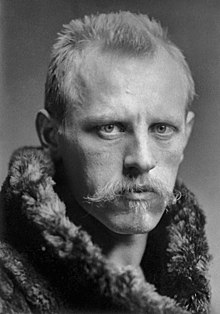
Fritjof Nansen
c. en.wikipedia.org


 Opportunity often comes disguised in the form of misfortune, or temporary defeat.

 People don’t like waiting. Lines, waiting rooms, oven timers, traffic jams are generally not things we look forward to. Least of all when your life is put on hold; when we have to wait to move forward. Few like their plans halted for any amount of time. My plans aren’t even that important, but I still hate it.

It’s easy to get mired down with a sense of self-pity during wait times. If only I could land this job, then…THEN my life could really get started. Or, Gee, I know I’d really be a great artist, but I don’t have the connections. If we allow ourselves to be paralyzed until “some day,” growth can easily be stunted.

I was very inspired to learn about Norwegian explorer and zoologist, Fritjof Nansen, who in March 1895, embarked on an unprecedented expedition across Greenland [made all the more complicated because the unconventional mode of transport he chose was skiing]. What had been slated as a 5-month trek, actually turned out to be much longer than he had counted on. Perhaps explorers got used to waiting and unexpected changes in plans, but I’m sure they sill got old.

The traveling conditions were bad. They had only what they could carry. They were close to starvation. If they didn’t speed up a little, they were sure to run out of food. While Nansen admitted some doubt to his journal, his guiding philosophy was, “a line of retreat from proposed action is a snare and that one should burn his boats behind him so there is no choice but to go forward. “  

The whole time he was traveling, he had his eyes on the prize, as they say. I’m sure it would be hard to be so forward focused that the day-to- day frustrations don’t get to you. At least that’s how it would be for me. Oh my GOSH!! we are out of food AGAIN!!!

So, after 78 days of skiing across Greenland amid grueling temperatures and dangerous conditions, Nansen’s crew reached the settled west coast only to realize that the last boat left 2 months earlier. Talk about your heart sinking. They were stranded for a winter in Greenland.

Undaunted, they created a hut with stone and moss. With a steady supply of bear, walrus and seal, they never went hungry. Nansen made the most of his time. He spent the winter hunting, sketching, taking pictures, studying, writing, and fishing. He explored, made new friends and learned to kayak. When he got home, he had enough notes and information for 2 books. 

He didn’t make it home until May 1896. If he had spent the time fretting and moping [like I would have done, no doubt], he wouldn’t have been able to have the mindset to be creative. In fact, he even writes as they are leaving, "It was not without sorrow that we left this place and these people, among whom we had enjoyed ourselves so well.”

Talk about making the most of a plan gone awry…

c.2012

Saturday, January 14, 2012

An Empress under pressure

 Elisabeth “Sisi,” Empress of Austria
c. forums.thefashionspot.com  


Unattainable body standards are nothing new. In the 1800s, way before Lindsay Lohan and Mary Kate ever graced the public with their teeny frames, there was Elizabeth, the Empress of Austria.

Elisabeth, or Sisi, as she was known, is said to have had an obsession with a 19-inch waist. I can’t help but think of the scene in Gone With the Wind, where Scarlett instructs Mamie to tighten her corset to 18 inches. 

Scarlett had nothing on Sisi, who maintained her 110 lb frame even after 4 pregnancies. She would fast, exercise and tighten her corset until she couldn’t breathe.

That was only the tip of the iceberg. She suffered stress-related symptoms from the anxiety of being constantly in the spotlight as Empress. Royal life didn’t agree with her. She was a free spirit. The freedom she was used to was replaced by rigid rules and expectations. She started to exhibit health problems. She had fits of coughing and anxiety.

Sisi was a shy, quiet girl; not at all, the perfect candidate for royalty, it would seem. She grew up in an eccentric home. Her father loved circuses and eschewed duty. Sisi’s unstructured childhood allowed her to roam about, frequently missing her classes. This freedom didn’t prepare her for the stifling demands of being an Empress.

Her husband, Francis Joseph had originally been intended to marry her dowdy sister Helene. But upon their meeting, he fell in love with Sisi. He declared if he couldn’t have Sisi, he wouldn’t marry at all.

Francis’s mother, Archduchess Sophie, turned out to be the sort of mother-in-law all new brides dread. She was overbearing and obnoxious. When Elisabeth had her first child, a girl, not the male heir everyone wanted, the new mother was made to feel like a huge disappointment in the household. Sophie called her a “silly young mother.” In fact, Sophie snatched the baby from the new mother right after birth, refusing to allow Elisabeth to feed her, and named the newborn, Sophie, after herself.

If this wasn’t enough to drive anyone mad, one day Elisabeth found a pamphlet on her desk with the following underlined.

...The natural destiny of a Queen is to give an heir to the throne. If the Queen is so fortunate as to provide the State with a Crown-Prince this should be the end of her ambition - she should by no means meddle with the government of an Empire, the care of which is not a task for women... If the Queen bears no sons, she is merely a foreigner in the State, and a very dangerous foreigner, too. For as she can never hope to be looked on kindly here, and must always expect to be sent back whence she came, so will she always seek to win the King by other than natural means; she will struggle for position and power by intrigue and the sowing of discord, to the mischief of the King, the nation, and the Empire…

Three guesses who this was from. Talk about toxic!

Sophie opposed Elisabeth’s slimming tactics. But only because she thought the Empress should always look pregnant.

Elisabeth found solace in, and fell in love with the country of Hungary. She would find respite from her anxieties by taking frequent trips there. Interestingly enough, all of the physical effects of her stress disappeared when she was there. She was relaxed and didn’t have to worry about her toxic family.

c. 2011

Thursday, January 5, 2012

No one likes a bossy britches

c. smh.com.au


Everyone was bossy today.  Everyone. No please, no thank you.

“Small coffee,”  thrusting money or a card in my direction. Often, no hello. Sometimes I like to stop their order just to say ‘hi,” but that’s a little catty.

Manners are a tricky thing. I don’t imagine most of them intend to be so demanding. Southern culture can be misinterpreted as demanding. I also think that they try to do it because they think they’re being funny. That’s a tough one, because very few can pull that off, and certainly none of the people I encountered today.

After work, I come home to a fully lit apartment. For some reason, my boyfriend needed all the lights on and has left without turning off a single one. He calls me “bossy britches,” when I mention it.  I said please, though.

Sometimes we get so driven, so focused, that we often forget niceties, everyone does that at some point. Sometimes we think, I shouldn’t have to thank them, that’s their job. I’m telling you it goes a long way.

For instance, a German man I just met the other day came up to the register, yelling “I need coffee!” [Probably half-joking, half serious]. I had my back turned, which made his statement and tone more alarming than perhaps otherwise. I think we all looked so surprised that he quickly softened his mood.

Thankless jobs abound in our society. I’m sure this has affected everyone at some point. I think this should be cause to make us more aware of how we treat people, if only because we know how it makes us feel.

At the same time, and I’m speaking to myself as well, a kind word and mild manner can change someone’s frenzied, toxic mood immensely. I’ve seen it happen more than once, even experienced it myself.  It is not my first instinct.


c. 2011

Thursday, December 22, 2011

Thoughts on Being a “Grown Up.”


http://000f022.netsolhost.com/
images/461_Poster-_MATURITY_copy.jpg
When I was very young, I thought grown-ups had it all together, just by virtue of being aged [keep in mind that “aged” to me could have been as young as 9]. This belief followed me until fairly recently, I’m afraid.

The word “old” to me, always meant experienced, mature. All the cool people I knew were older than me. I saw it as a good thing. I aspired to be old. I couldn’t wait until I was a grown up. No one told a grown up to clean their rooms or go to sit still in school for boring classes. They had complete freedom. They could go places. They could go to work. They could pay for things with credit cards.

Now that I am technically a grown up, it is very cool, no doubt. But, at the same time, it can be kind of terrifying. I don’t feel grown up. Sure, no one tells me to clean my room, but I’d better get that rent check in on time. EVERY month, no less. I didn’t take into account the responsibilities that came with the freedoms I envied. Sure I no longer have to sit in math class for an hour. Now I am responsible for bills with very real consequences should I miss them. I no longer have to go to school, but I have jobs, which actually are WAY cooler than my school ever was.

But there was something about the security of growing up. Sure, I longed to be an “adult,” like the cool people on TV or just people I admired in life, but I always felt secure. Perhaps I was naïve, but I never worried about bills or jobs, except for when I was playing “house,” or Barbies.  Now that I’m older, they’re not as fun as I remember.

My dreamy boyfriend says that people do not actually grow up. They stay the same person they were when they were young. I do agree with that, to an extent. Sure, I may know a little more than I did when I was young, I’ve got a few more experiences under my belt. [Though, every once in a while I get an urge to go back in time to beat some sense into the high school me]. I hope I’m a little more sophisticated than I was when I was younger, but I still feel very much the same person as when I was a kid. I see grown up versions of the kids I used to babysit; they’re the same too.

The best example of this is the Monica character on Friends, when she and Ross were competing to be on the Dick Clark New Year’s Rockin’ Eve show. At long last Ross and Monica were able to fulfill a lifelong dream of being dancers on the show. They had practiced for years a routine for just the occasion, accompanied with the same childhood excitement.

I love watching her slip into her childhood effervescence, from her otherwise sophisticated character. At one point, Chandler says to her, “Ohh, you’re still just a little fat girl inside, aren’t you?”

The reason I find this so funny is that I know I slip into my childhood persona just like Monica. I wonder if others do too…
c. 2011


Tuesday, December 6, 2011

You are Special


From Max Lucado’s You are Special

c. thomasnelson.com
And all day the Wemmicks did the same thing; They gave each other stickers. Each Wemmick had a box of golden star stickers and a box of gray dot stickers. Up and down the streets all over the city, people spent their days sticking stars or dots on one another.

The pretty ones with their smooth, fine paint, always got stars. But if the wood was rough or the paint was chipped, the Wemmicks gave dots.

The talented ones got stars too. Some could lift big sticks above their head or jump over tall boxes. Still others knew big words or could sing pretty songs. Everyone gave them stars.

Some Wemmicks had stars all over them! Every time they got a star, it made them feel so good! It made them want to do something else, and get another star. Others, though could do little. They got dots.

----
This sounds a lot like most work situations. Actually, it sounds like any group or organization-type situation. There will always be the stars; and well, the slightly duller rocks too. It’s easy to find our worth in how much we are performing, how much we are producing, how much we are shining.

In fact, I would wager to say that most of us go through life making sure that we are getting more stars than dots. It’s normal. Who doesn’t like positive reinforcement?

Awaiting the verdict, will I get a star or a dot, can be very stressful. It’s not bad to want to excel, to do a good job. We compromise ourselves when we don’t. It’s when we start to base our value on the number of stars or dots that become a problem.  Some days we just aren’t going to shine, and what then? Are we less of a person?

Our worth is great even if we aren’t producing, performing, or shining.

My boyfriend and I entered a contest to win a radio show on the local radio station. We made it to the top 10. We didn’t win. [I do think we were the best]. We knew it was out of our hands. We just weren’t the right fit. We were disappointed and we could have concluded that we were huge dots.

Instead, we are going to keep trying, keep shining, pursuing different outlets and avenues. We are not going to let failure or the threat of a brown dot dissuade us from being the stars we are. And neither should you.


Friday, November 25, 2011

On the Lamb

http://upload.wikimedia.org/wikipedia/commons/6/66/Lamb_
January_2007-1.jpg
Suzanne Davenport Tietjen is a shepherd who tells a story about one of her pregnant ewes, Lily. It was lambing season and since none of the lambs were showing signs of giving birth, she thought it was safe to go out. She had no idea she’d be coming home to a dire situation.

“Lambing instinct is pretty variable – some new moms act as if they know just what to do, while others fail to recognize any of the feelings of labor. Birth catches them by surprise.”

And that’s what happened to Lily.

The shepherd came home to a frenzied and frenetic Lily, who was running in circles around the barn, looking for something. They recognized the telltale signs that she had just given birth; She was searching helplessly for her baby, who had somehow gotten, well, lost in the confusion.

Her daughter quickly recovered the baby, shivering in the cold.

They presented the baby to Lily, according to Tietjen, but Lily showed no interest. She was much too busy searching for what she had lost.  She seemed to shake her head as if to say, Nope that’s not what I’m looking for, as she continued her manic search.

As I read Tietjen’s story, I saw myself. How often do I act just like Lily, frantically searching for something I know is important, but don’t recognize it when it’s right in front of me?

If I’m too busy recklessly thrashing about, how can I possibly have the clarity of thought to recognize anything when I see it?

When frenzy seems to take over me, I need to breathe through it; Go slower.

Well, after some quick thinking on Tietjen’s part, as only a shepherd can, she got Lily to bond with her baby. They are doing fine.


c. 2011

Wednesday, November 9, 2011

You are Rich


http://www.freefoto.com/images/04/28/04
_28_50---US-Dollar-Bills_web.jpg
When I was younger I used to define wealth as how much money someone had, how much stuff they could buy. [Sometimes I still do].

As I’ve gotten older, I’ve realized that while money is definitely nice, it is not everything. I’ve seen it cause more problems and stress than it’s worth.

I’ve known of girls who literally sell their bodies for money. I’ve seen men sacrifice their families and themselves for money. I’ve seen people waste hours of pure drudgery doing something they didn’t even like for a days, months, years. 

For what?

I know one girl who makes it her mission to have the latest techie gadget. Then she spends so much time playing with it and showing it off that she can’t relate to others. She’ll be in her techie ‘zone,” impossible to have a conversation with. Then the toy breaks. What now?

We need to simplify.

It’s not all that easy, you say. Have you seen the recent economic figures? Have you seen the price of…well, anything?

Yes, it’s nice to have stuff, I am the first to attest. But it is nicer to have peace of mind and a lack of stress. Nicer…and more profitable, I might add. Profitable because you are not wasting brain cells worrying, so there is plenty of space to create; to problem solve, to innovate.

Ideas flow when you are relaxed; so does production.

It’s not that I don’t feel bad for people who have lost their job, I know it’s traumatic, painful and often requires an uncomfortable lifestyle change. But as an outsider, I know that money comes and goes. As an outsider, this seems like an awesome opportunity to progress. Of course, I certainly wouldn’t recognize it, if the tables were turned. And I will probably have to be reminded of this posr.

But it is nice to realize that money isn’t everything. [Thank goodness.]. You can live just as rich a life [and often richer] with little as you can a lot.